Can This Defense-Born Technology Earn a Place on a Civil Aircraft?
“Can this defense-born technology solve a valuable commercial aviation problem without carrying an unworkable certification, integration, or ownership burden?”
That question should lead the commercialization review. Technical performance achieved in a military program establishes useful history, but it does not by itself establish suitability for civil aircraft. A commercial program also needs an identifiable buyer, a workable installation path, lifecycle support, consistent production, and evidence the Federal Aviation Administration can evaluate.
The first discipline is to define the article. An avionics module raises different approval questions from a structural material, propulsion component, inspection system, autonomy function, maintenance tool, or ground-based software service. Sensors may sit inside a certificated installation. Portable maintenance equipment may never become part of the aircraft. Ground software can still affect operational decisions without occupying an equipment bay.
The Boundary of “Aerospace Ready”
Aerospace readiness describes performance within a stated configuration and operating context. The term stops holding when a team treats military acceptance as blanket evidence for an unrelated civil installation. Buyers and regulators need to know which product is being offered, where it will operate, who will install it, and what happens when it fails.
Aircraft Fit: Keep the initial claim narrow enough to connect one article, one installation context, and one operational problem.
This framing prevents an impressive defense pedigree from obscuring a weak commercial proposition.
Where Military Qualification Evidence Stops Being Sufficient
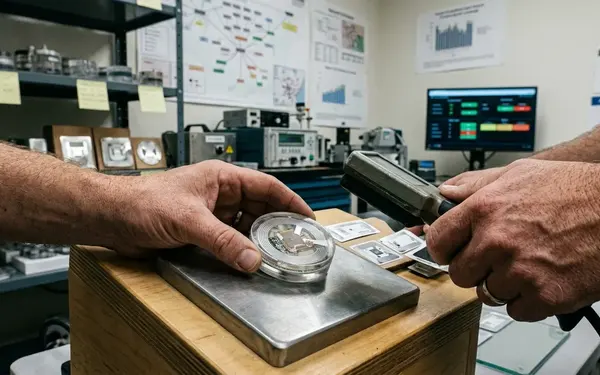
A qualification file may appear extensive: environmental tests, reliability results, inspection records, drawings, and field reports. A controlled comparison often changes that impression. When military and civil requirements are placed in separate ledgers, differences emerge in mission duration, acceptable failure conditions, maintenance concepts, operating environments, and procurement economics.
Military results can remain valuable. Their reuse depends on configuration traceability, test provenance, environmental relevance, and acceptance under the eventual civil certification plan. Capabilities developed around Middle Georgia’s defense supplier base still require review by civil operators, manufacturers, maintenance organizations, and aviation customers before the supporting packages can serve as civil evidence.
Build the Evidence Translation Matrix
Create one row for every military requirement or completed test. Add columns for the proposed civil requirement, tested configuration, evidence source, remaining gap, responsible owner, and disposition. A Middle Georgia qualification test should not count as an FAA means of compliance until each field is complete.

The matrix forces a useful distinction between evidence that transfers, evidence that needs substantiation, and evidence that must be generated again. It also exposes tests performed on earlier hardware, undocumented software builds, altered fixtures, or components from suppliers that will not support production.
Military test pedigree alone carries no civil acceptance. The unresolved question is whether each artifact can be tied to the configuration that a commercial customer will actually receive.
Validate the Civil Use Case Before Funding a Redesign
Commercial discovery should begin with one narrow application defined by aircraft class, operating environment, installation location, customer type, and problem solved. Describing the technology as a universal aerospace platform makes customer interviews vague and redesign estimates unreliable.
Consider a defense-born health-monitoring sensor proposed for a cargo aircraft auxiliary system. The user may be a maintenance technician. An airline or cargo operator may control the budget. A maintenance, repair, and overhaul provider may perform the installation. The FAA or an authorized approval process will shape regulatory acceptance. Disruption risk stays with the operator if alerts prove unreliable. Those roles can sit in separate organizations with different buying criteria.
Use Georgia’s Aviation Environments as Distinct Tests
Structured discovery can move through Savannah’s aerospace manufacturing and service cluster, metro Atlanta’s airline, cargo, and airport ecosystem, and civil-facing suppliers in Middle Georgia. Each environment tests a different assumption. Savannah can clarify production and service integration. Metro Atlanta surfaces fleet, cargo, airport, and maintenance constraints. Middle Georgia suppliers can identify which defense-era processes and records remain reproducible.
During this stage, the Georgia Centers of Innovation can help frame connections across sector participants. Georgia Institute of Technology capabilities or Georgia Research Alliance (GRA) relationships may become relevant where university-originated research, testing, or intellectual property appears in the technology history. Their involvement must connect to a defined technical or commercialization task rather than serve as a general endorsement.
Write a Testable Civil Value Proposition
- Name one aircraft class, operating environment, and installation location.
- Describe the operational problem in the current workflow and the consequence of failure or downtime.
- Identify the user, economic buyer, installation partner, regulatory approver, and operational risk owner.
- State the evidence needed to support the claimed operational value.
- Remove unsupported savings and performance figures from the proposition.
Only then does a redesign budget have a defined commercial target.
Choose the FAA Approval Route Before Freezing the Civil Design
The approval discussion starts by classifying what will be sold. Is it a new aircraft feature, a change to a type design, an article built to a technical standard, a replacement part, portable equipment, maintenance tooling, or a ground-based service? That classification shapes the design records, applicant responsibilities, installation data, and schedule.
Candidate pathways may include a type certificate or amended type certificate, supplemental type certificate, Technical Standard Order authorization, and Parts Manufacturer Approval. None applies automatically. The appropriate route depends on the product, proposed installation, design responsibility, and certification basis. The FAA provides an overview of FAA aircraft design approval pathways, while the project still requires a product-specific plan.
A TSO Authorization Is Not an Installation Ticket
A Technical Standard Order authorization concerns an article meeting a minimum performance standard. It does not by itself approve installation on a particular aircraft. Installation approval must address the aircraft interface, intended function, safety effects, environmental conditions, and compatibility with the applicable design.
This boundary matters for defense-born avionics. A team can redesign an enclosure and interface around a presumed TSO route, then discover that the aircraft-level installation requires additional substantiation. The practical way around that limit is to develop the article and installation assumptions together. Earlier coordination, more disciplined interface definition, and a larger initial evidence plan are the cost.
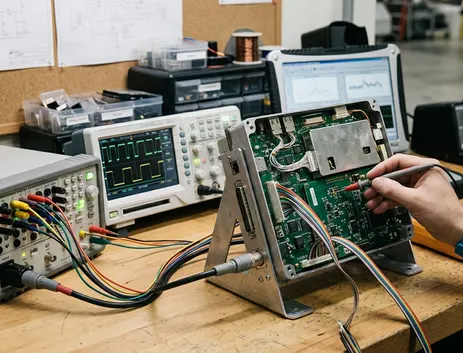
Airborne software adds another layer. Advisory Circular 20-115D frames software-development assurance using RTCA DO-178 terminology. Product-specific reviews may also need to address environmental qualification under DO-160 and airborne electronic hardware considerations under DO-254. These documents supply assurance vocabulary and methods; the certification plan determines their application.
Rebuild the Product Around Traceable Civil-Aviation Evidence
Once the likely approval path is understood, convert the certification-path memo into a requirements baseline. Each customer need should connect to regulatory requirements, safety findings, verification methods, and configuration-controlled evidence.
Civil operations may drive changes to power and data interfaces, electromagnetic compatibility, flammability, environmental exposure, cybersecurity, maintainability, human factors, weight, and installation access. A sensor that performed well in a military platform may need a different connector, enclosure, software behavior, maintenance interval, or cockpit indication for its proposed commercial use.
Control the Build That Generates the Evidence
Configuration management must cover hardware, software, drawings, supplier parts, test fixtures, calibration records, procedures, and reports. A passing result loses much of its value when the tested serial configuration cannot be reconstructed.
- Assign identifiers to hardware and software baselines.
- Record supplier part revisions and approved substitutions.
- Link every verification result to the applicable requirement.
- Preserve fixture configuration and calibration status.
- Route design changes through documented impact review.
Evidence from a different build should not be assumed to represent the commercial configuration. This discipline can slow informal iteration, yet it reduces the chance of entering certification with an attractive test archive that cannot support conformity.
Clear Intellectual Property and Data Rights Before Customer Disclosure
A civil opportunity can stall before certification if the company cannot show what it owns or disclose the technical material needed for evaluation. Build an ownership schedule covering patents, patent applications, software, technical data, test results, trade secrets, third-party components, university contributions, employee inventions, and government-funded development.
Read the originating contracts and document markings. The review should determine whether the company owns the relevant material, whether government or third-party rights apply, and whether technical data can be reused in a civil certification package. Marketing permission, certification use, manufacturing rights, and customer disclosure may each require separate treatment.
Separate the Defense Core From Civil Integration
Draw a clear boundary around the pre-existing defense technology. Track new civil modifications, installation data, certification artifacts, software changes, and customer-funded improvements as separate work products. That structure gives the parties a practical basis for negotiating ownership and licenses.
Disclosure Hold: Do not send drawings, source material, or test records to a prospective customer until the rights-and-restrictions schedule identifies what may be shared.
The schedule also clarifies where licensing may offer a cleaner commercialization route than direct production.
Run One Integrated Go, Revise, or Stop Decision
Commercial, engineering, certification, manufacturing, finance, and intellectual-property owners should meet in one review. Separate workstream approvals can produce a concept that looks viable from every narrow perspective while failing at the interfaces between them.
Bring Five Artifacts to the Same Table
- A validated use-case statement.
- A certification-path memo.
- An evidence translation matrix.
- A rights-and-restrictions schedule.
- A phase-specific cost and resource estimate.
The group then selects an explicit outcome: advance, revise the target application, seek missing evidence, license the technology, or stop. Prior defense-development effort should not dictate the civil decision. The gate evaluates the remaining commercial path from the current date forward.
A conditional advance also needs named closure items. If installation authority remains uncertain, assign the certification-path question. A qualification report lacking provenance calls for recovery or replacement testing. When customer value remains broad, return to discovery with a narrower aircraft and operating context.
The strongest outcome may be a revised application that uses less of the original technology but presents a cleaner approval and ownership path.